
Ecocide. Anthropological Perspectives
Anthropology Day 2026
8 May
Wereldmuseum Leiden
Register and get your tickets here!
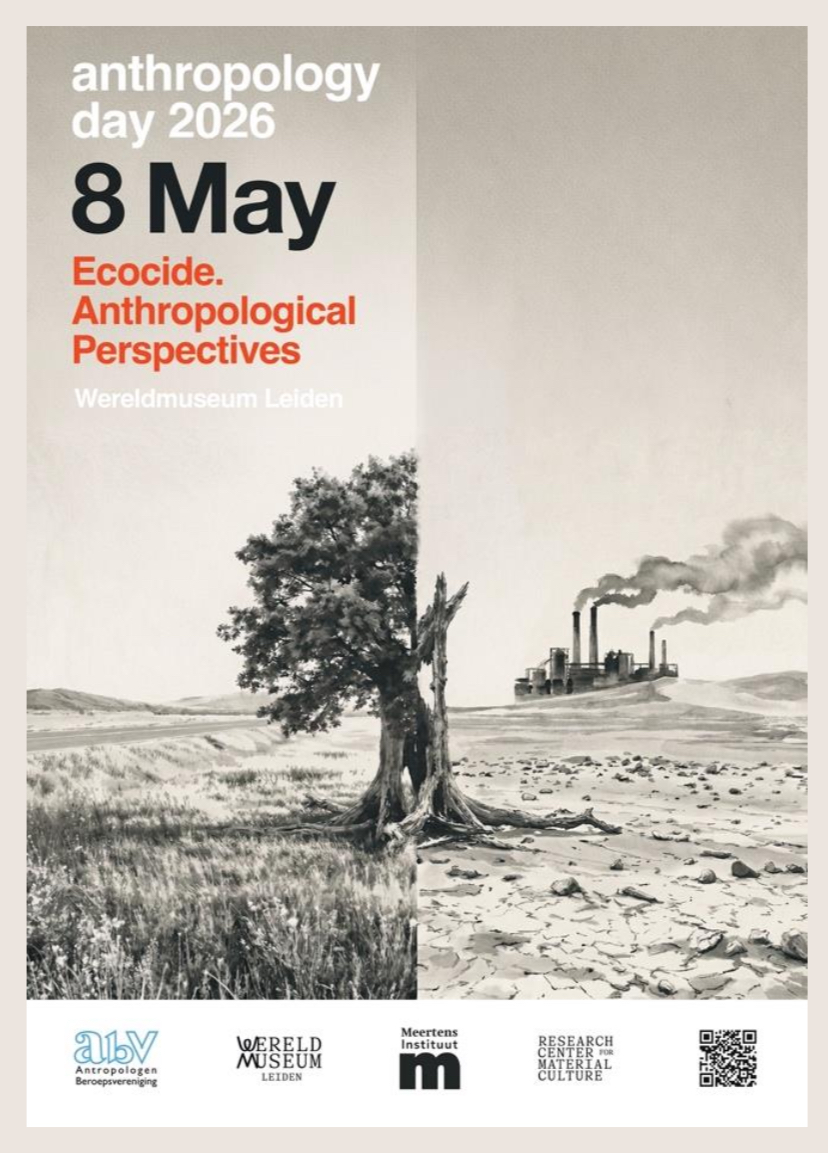
This anthropology day focuses on ecocide through the intersections of violence, multispecies entanglements, memories, narratives and ontologies. What does it mean to inhabit a world where the destruction of ecological habitats, lifeways and cultures is normalized and accelerating? Across the planet, we are witnessing the destructive effects of climate change, industrial capitalism, the overexploitation of natural resources, pollution, militarism and war. This includes acute forms of destruction, as well as gradual (yet exponential) processes of slow violence, in which agency and responsibility are obscured, complicating questions of justice and accountability. An anthropological focus on ecocide uncovers the interconnectedness and long-term effects of the planetary nature of destruction and entails the systemic unraveling of multispecies lifeworlds.
Ecocide is not only an ecological and legal issue, but a window into the moral and political orders of our time. As ecocide gains legal and political status, the conceptualizations and lived realities of ecocide are gaining attention in anthropology. How is ecocide defined and who gets to define it? How does ecocide intersect with coloniality, extractivism, genocide, and militarism? How is ecocide experienced through grief and loss and connected to (global) inequalities? What forms of resistance, contestation and care emerge in the face of ecocide? How can positions of the more-than-human be represented? How do anthropological approaches to ecocide intersect with legal, political and psychological ones? What does it mean to sustain spaces for care and reflection amidst the sense of permanent emergency? These are some of the questions which will guide us on the Day of Anthropology, 8 May 2026, during which we will explore anthropological perspectives on ecocide.
KEYNOTES